

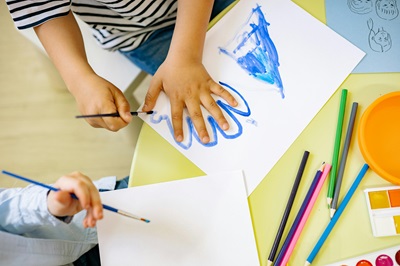
Introduction
Art education plays a crucial role in fostering creativity among children. It provides them with opportunities to express themselves, explore new ideas, and develop critical thinking skills. This article delves into the various ways in which art education enhances children's creativity and its broader implications for their overall development.
Key Contributions of Art Education
1. Encouragement of Self-Expression:
- Art allows children to convey their thoughts and emotions in unique ways. This self-expression helps build confidence and encourages them to share their perspectives.
2. Development of Critical Thinking:
- Engaging in artistic processes requires problem-solving and decision-making. Children learn to evaluate their work, make choices, and adapt their ideas, enhancing their critical thinking skills.
3. Fostering Imagination:
- Art education stimulates the imagination. Children are encouraged to think outside the box, experiment with different materials, and explore new concepts, which broadens their creative horizons.
4. Cultural Awareness and Understanding:
- Through art, children are exposed to diverse cultures and histories. This exposure promotes empathy and understanding, as they learn to appreciate different perspectives and artistic traditions.
5. Collaboration and Social Skills:
- Group art projects foster collaboration and teamwork. Children learn to communicate their ideas, listen to others, and work together towards a common goal, enhancing their social skills.
6. Motor Skills Development:
- Art activities, such as drawing, painting, and sculpting, help develop fine motor skills. The process of creating art requires coordination and control, contributing to physical development.
Challenges and Considerations
1. Access to Resources:
- Not all children have equal access to art education. Ensuring that all children have the opportunity to engage in creative activities is crucial for equitable development.
2. Standardized Testing Pressures:
- The emphasis on standardized testing in schools can limit time and resources allocated to art education. Advocating for a balanced curriculum that includes the arts is essential.
3. Quality of Instruction:
- The effectiveness of art education depends on the quality of instruction. Educators should be trained to nurture creativity and provide a supportive environment for artistic exploration.
Conclusion
Art education is vital in enhancing children's creativity by fostering self-expression, critical thinking, and collaboration. By providing children with opportunities to engage in artistic activities, we equip them with essential skills that extend beyond the classroom. As society continues to evolve, nurturing creativity through art education will be increasingly important for developing innovative thinkers and problem-solvers.
Keywords
- Art Education
- Creativity
- Self-Expression
- Critical Thinking
- Cultural Awareness
- Collaboration


