

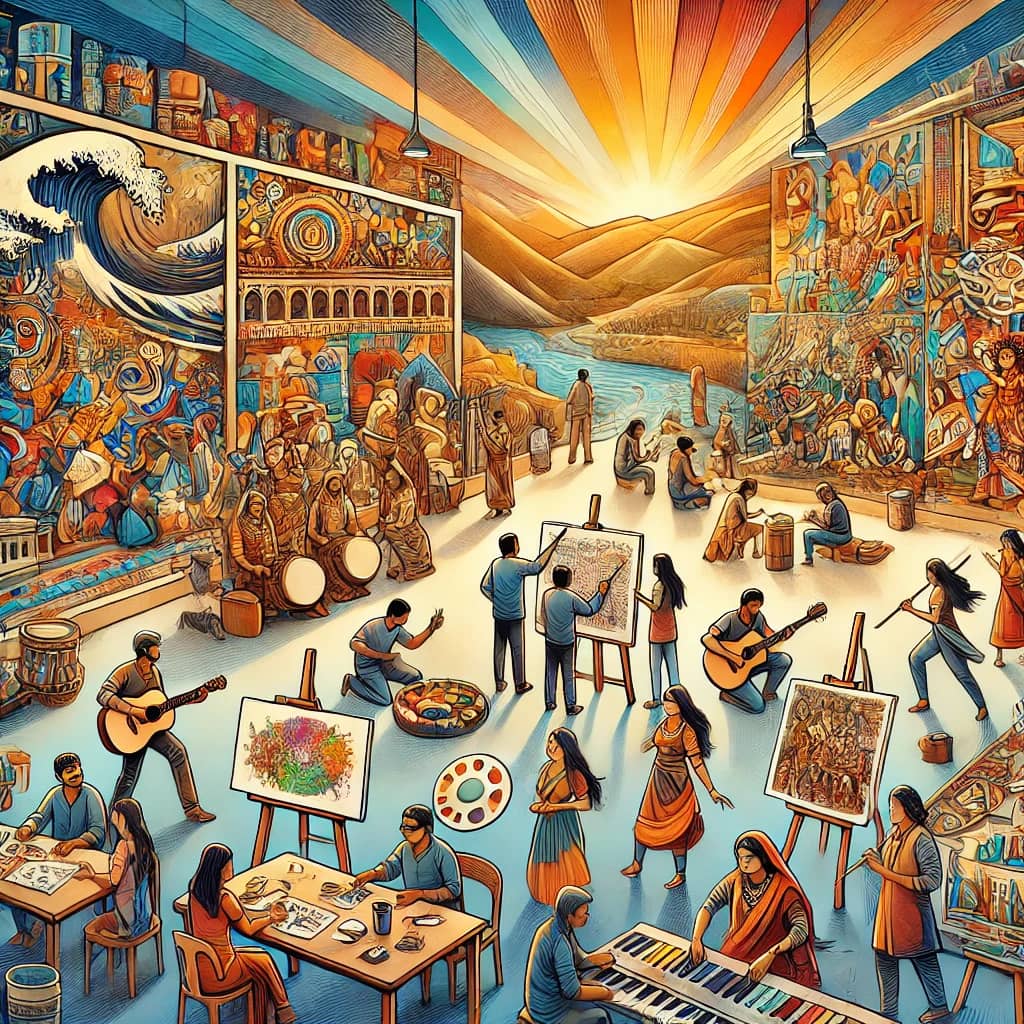
The Role of Art in Cultural and Social Development
Introduction
Art serves as a powerful medium for expression and communication, playing a vital role in cultural and social development. It reflects societal values, fosters community engagement, and drives social change. This article explores the multifaceted impact of art on culture and society.
1. Art as a Reflection of Culture
- Cultural Identity: Art captures the essence of a community’s identity, traditions, and history. It preserves cultural heritage and promotes understanding among diverse groups.
- Storytelling: Through various forms—visual arts, music, dance, and literature—art tells the stories of people, conveying their experiences and perspectives.
2. Art in Social Development
- Community Building: Art initiatives bring people together, fostering a sense of belonging and collaboration. Community art projects encourage participation and strengthen social ties.
- Empowerment: Art provides a platform for marginalized voices, enabling individuals to express their struggles and aspirations. It can empower communities to advocate for social justice and change.
3. Education and Awareness
- Cultural Education: Art education promotes cultural awareness and appreciation, teaching individuals about their own heritage and that of others.
- Social Issues: Artists often address pressing social issues through their work, raising awareness and prompting dialogue about topics such as inequality, environmental concerns, and human rights.
4. Economic Impact
- Creative Industries: The arts contribute significantly to local and national economies through job creation, tourism, and cultural events.
- Investment in Communities: Supporting the arts can lead to revitalization of neighborhoods, attracting businesses and enhancing community pride.
5. Art and Mental Health
- Therapeutic Benefits: Engaging with art can have therapeutic effects, promoting mental well-being and providing an outlet for emotional expression.
- Community Healing: Art can play a crucial role in healing communities affected by trauma, offering a means to process experiences and rebuild connections.
Conclusion
Art is an essential component of cultural and social development, influencing identity, fostering community, and driving change. By recognizing and supporting the role of art, societies can enhance their cultural richness and promote social cohesion.
Additional Resources
- Organizations Supporting Art:
- Books on Art and Society:
- "The Art of Community: Seven Principles for Belonging" by Charles Vogl
- "Art and Social Change: A Critical Reader" edited by Will Bradley and Charles Esche


